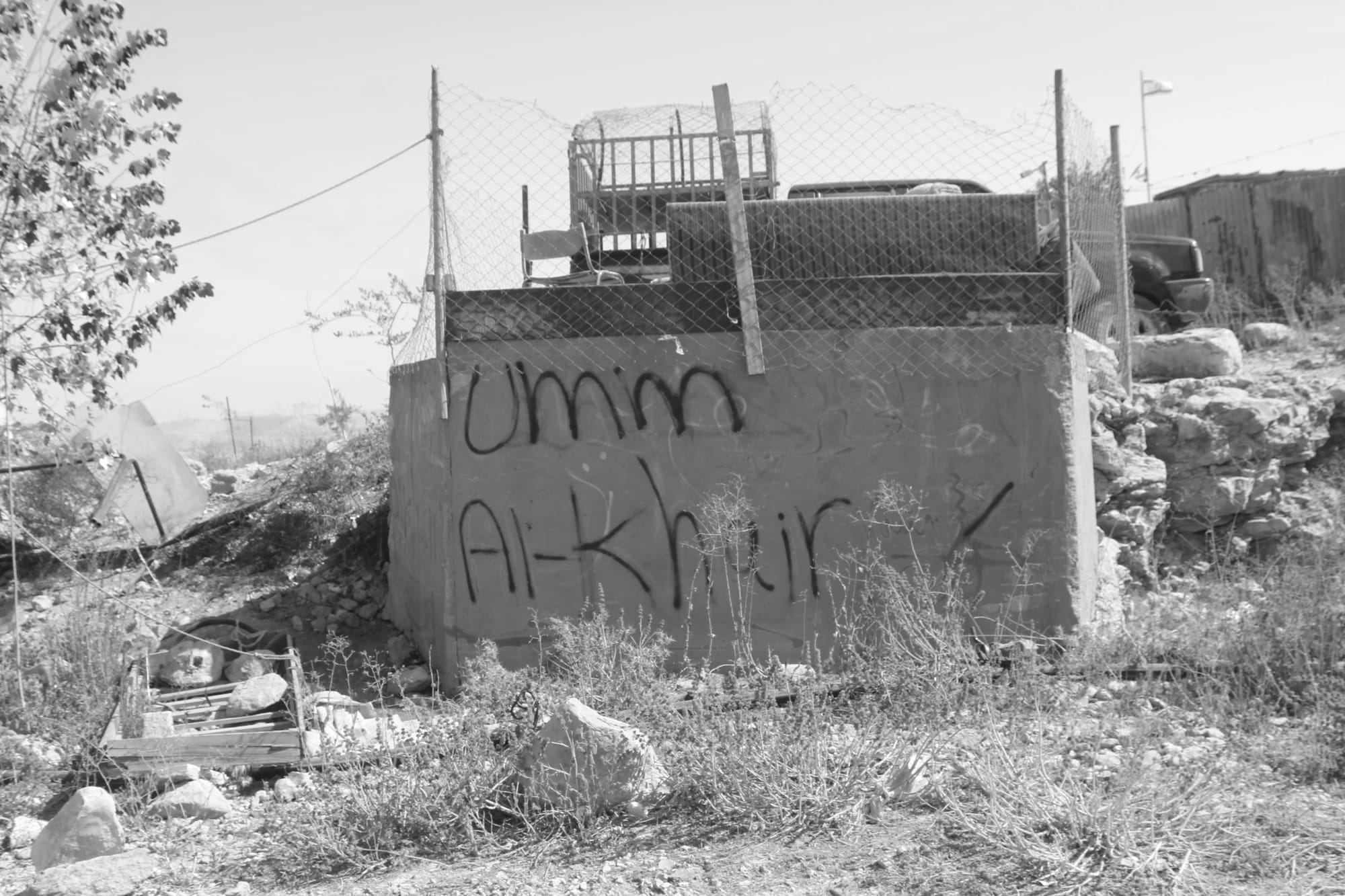
In July, amid the most intense heatwave in decades in the Occupied Territories of Palestine, the women of the community of Umm al-Khair, a village in the Southern Hills of Hebron, in the area of Masafer Yatta, are in profound shock after 10 days of hunger strike. United under a black tent, they have gathered day and night, organizing the hunger strike to demand one thing: the release of their beloved Awdeh Hathaleen’s body, martyred on July 28th, 2025.
Sitting on the mattress on the floor of the tent, together with the other women, there is Hanneen Hathaleen, niece of Awdeh. She is among the 60 women, ranging from teenagers to elderly women, who organized the hunger strike. “It started with a few women, and soon the rest naturally followed,” she recalls, showing how solidarity became the foundation of their resistance against the violent occupier, despite the pain and the injustice.
During the strike, the women stayed together at all times, even at night, sleeping in a single tent. Fear of remaining in their homes drove this decision, especially after 20 men of the village, including Haneen’s husband, were detained and beaten up by Israeli authorities. The OHCHR has documented evidence, including testimonies and medical reports, showing that detainees — especially at Ofer Military Camp — faced ill-treatment. This includes physical exams from Al-Ahli Hospital confirming abuse of six Bedouins detained after Awdeh’s killing. Fatima Hathaleen, Awdeh’s mother-in-law, recounts that “they would arrest them separately and on different days. We, the women of Umm al-Khair, are just as strong as men — if not stronger.” Her words emphasize their readiness to face any challenge.
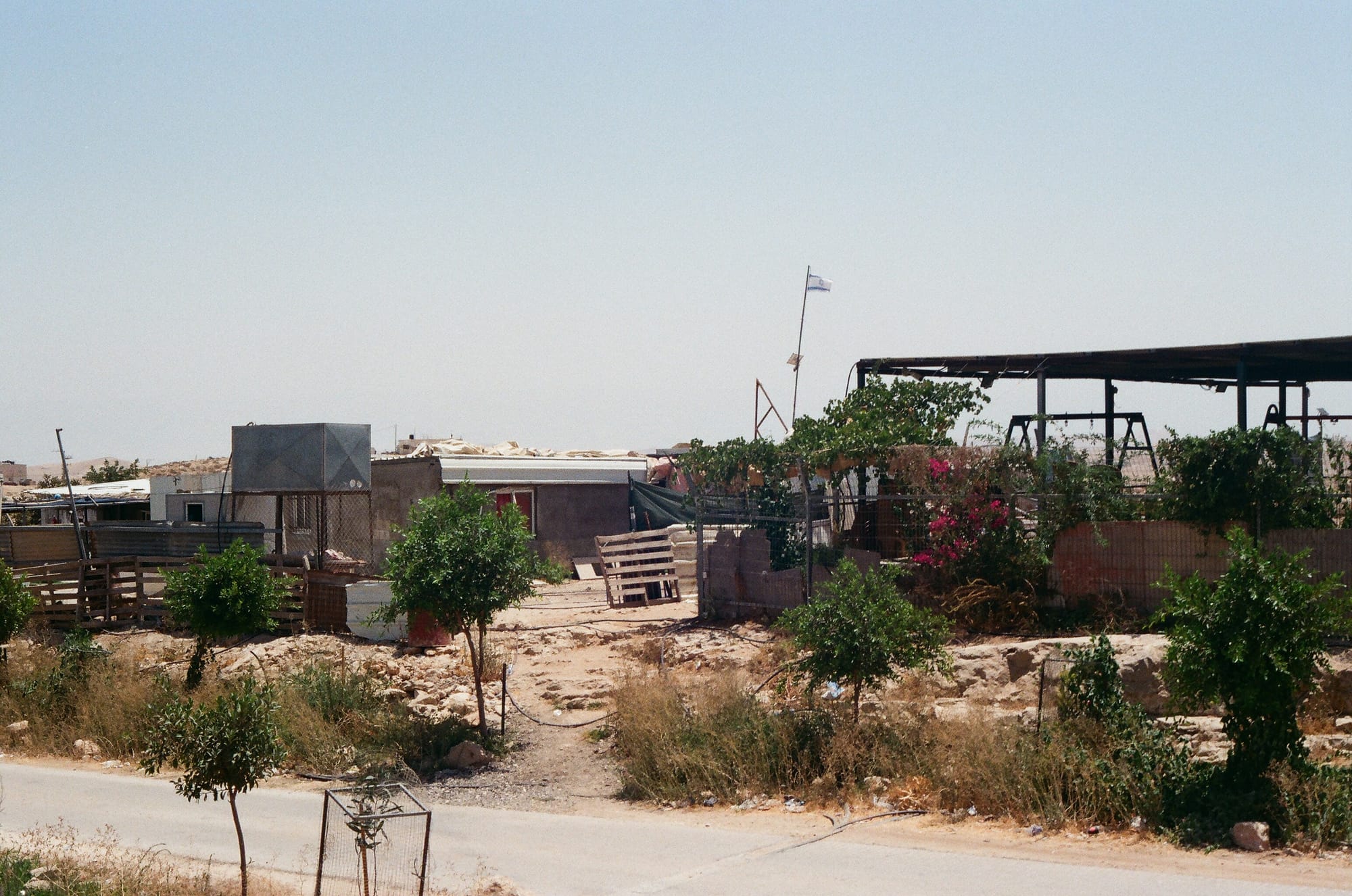
Awdeh was the soul of Umm al-Khair’s peaceful resistance. “If you ask anyone in the community who Awdeh was, they would say he was our everything,” says Haneen, while holding her son. The loss of Awdeh is enormous for the entire community; he was always present and the person closest to everyone. Haneen continues, “He was the face of the community, the brother of everyone.”
Awdeh Hathaleen, an activist, teacher, husband, and father of three young children, was martyred at just 31 years old on his own land. Known for contributing to No Other Land with Basel Adra, which won an Oscar, Awdeh was shot to death by Yinon Levi, who hit his chest twice, in front of his community.
Yinon Levi, the killer of Awdeh Hathaleen, living in the Carmel settlement adjacent to Umm al-Khair, has been sanctioned by the EU, UK, Canada, and the Biden administration for his role in perpetuating illegal settler violence. Levi and other settlers from Meitarim Farm have repeatedly attacked surrounding communities, destroying property, which culminated in the forced displacement of entire villages. However, the Trump administration later reversed these sanctions — which included travel bans and asset freezes — under pressure from the Israeli government led by Benjamin Netanyahu. Levi was released by the Israeli authorities for “insufficient evidence” before Awdeh’s body was returned to his homeland. In an interview, a member of the Jerusalem Legal Aid Center (JLAC) expresses profound disbelief at the situation: “How can you release the killer and keep the victim? How is that possible? This irony is beyond comprehension.”
The Israeli occupying authorities subject the relatives of the martyrs, whose bodies they hold, to immense humiliation. “What we are living through here is a huge injustice,” Fatima told us the day after Awdeh’s body was returned to the community. “But the people of Umm al-Khair remain resilient; they will never leave. We were raised here, our childhood was here, and everyone is rooted to this land, just like the body of Awdeh.”
The injustice, in fact, is immense: Awdeh’s murderer was already roaming free while his body was withheld by the Israeli authorities. Hanneen recalls how, at night, Levi and other settlers would keep going to the village, vandalizing homes, intimidating women gathered in the mourning tent during their hunger strike, and trampling on the community’s pain, shouting, “He’s dead.” Furthermore, the women report that it was especially hard for the men of the community to witness the murder of their brother by an armed man who remained free of any punishment, while bulldozers dug into the ground and settlers poisoned the trees.
Hanneen also emphasizes that the harassment after October 7th has escalated at an alarming rate. In previous years, she thinks that this process was more contained due to concerns about possible international backlash. However, now they act without restraint, believing that there will be no consequences for their actions. “After everything that’s happened in Gaza, no one has held Israel accountable for anything,” says Hanneen. “So, whatever they do here, who would dare to challenge them?”
The impunity Israel enjoys for its ongoing actions in Gaza has emboldened the settlers, who are becoming increasingly aggressive. “They have come every night since October 7th. It is not like before, and we cannot sleep,” say the women, referring to nightly settlers’ harassment. In the community, there is a deep fear of the rapid pace of displacement and annexation, along with frustration at the international community’s failure to hold Israel accountable for what they view as the actions of a “terrorist state.”
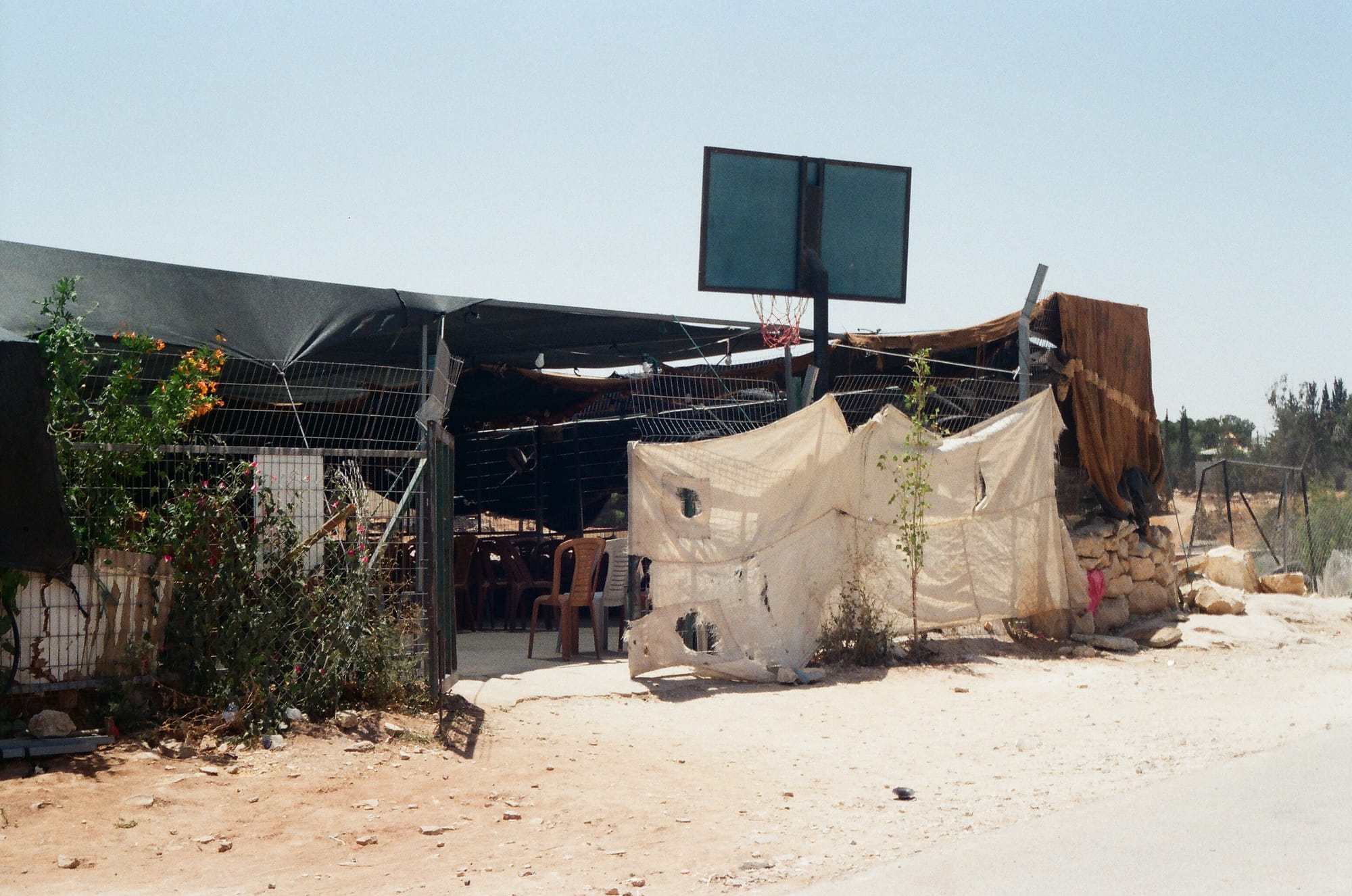
According to JLAC members, the humiliating condition imposed on Awdeh’s family — requiring them to bury his body either in the municipal areas of Hebron or Yatta, instead of the village’s family cemetery — delivers a clear message: the risk of demolition of the entire village and the erasing of any connection to the land. This act of controlling funerals is one of the brutal tactics behind the practice of holding the martyrs’ bodies as hostages.
Another degrading condition imposed on the Hathaleen family was the restriction of mourners to just 15 family members, while 20 Israeli police officers were present. “Israel seeks to limit the presence of Palestinians at these funerals because they often turn into demonstrations or clashes with Israeli forces,” JLAC members explain. “However, when the case gained media attention and international solidarity stood by the family and the hunger strike, it became clear that the resistance and unity of the people had a powerful impact.”
Awdeh’s body was withheld by Israeli authorities for 10 days, used as a bargaining chip to blackmail the community and impose conditions for his funeral, depriving relatives and friends of their basic right to mourn and bury him with dignity. This episode is part of a broader colonial practice of Zionist settler colonialism, where the bodies of martyrs are held to control the afterlife of Palestinians, exercising power over their grief, memory, and mourning.
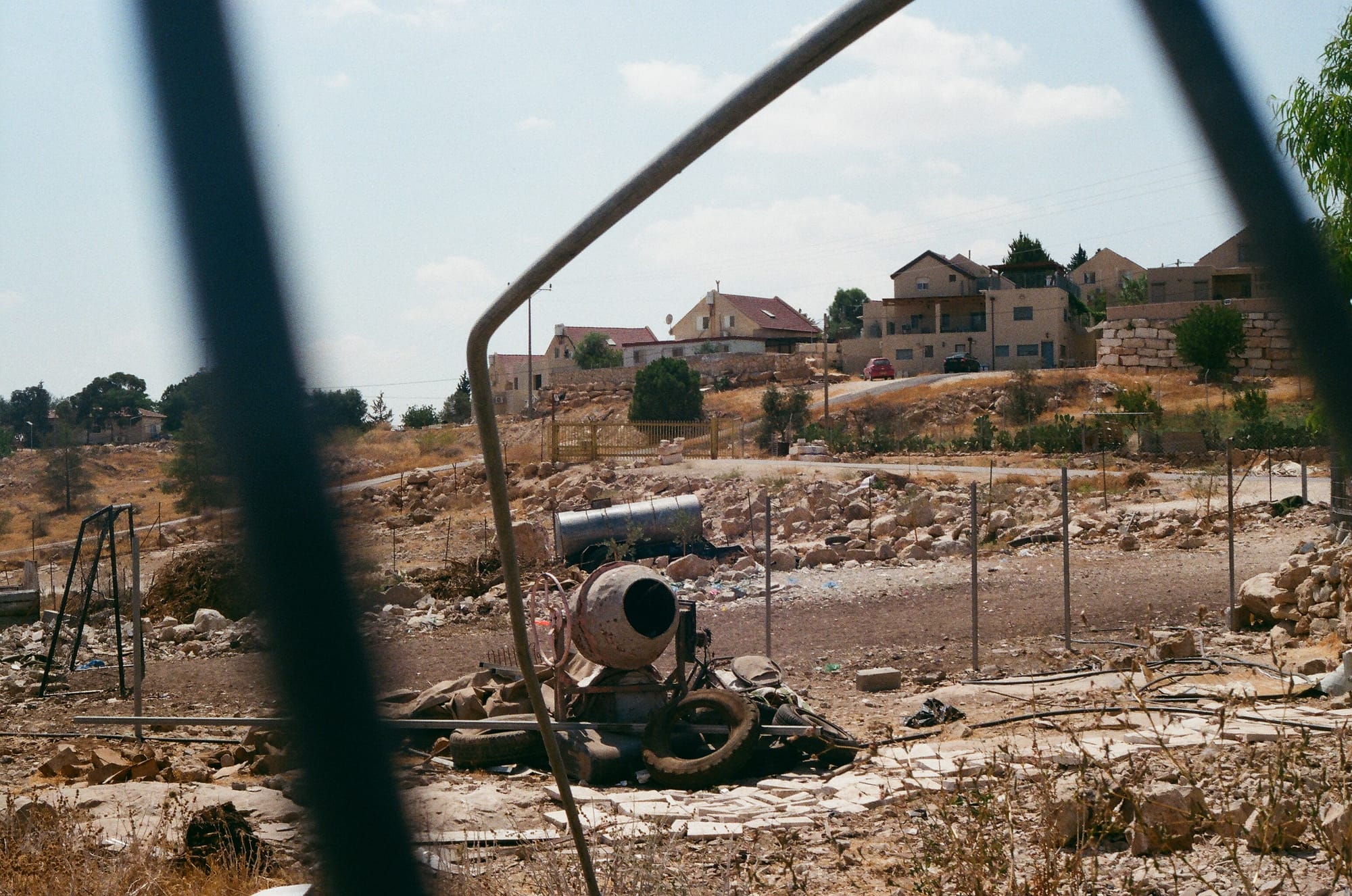
A practice of dominion, occupation, and colonial control rooted in the logic of relegating life to non-life, of tearing life away. In settler-colonial logic, anthropologist Elizabeth Povinelli calls it geontopower: the power to trace a line between life and non-life and control what exists in between. This invisible space that the colonial occupier seeks to control — this time span where mourning and burial should be sacred — becomes disrupted by the Israeli occupation, depriving families of their soul while they wait for their natural right to bury their holy martyr.
JLAC affirm, “Any colonizing or occupying power will always implement policies that are impossible to truly observe, either through direct or indirect contact with the colonized.” The Israeli occupation affects every aspect of Palestinian life, visible in checkpoints, the wall, and settlements. But there are also more subtle, invisible practices, such as withholding martyrs’ bodies, which reflect the colonial logic Israel employs to control Palestinians, both living and dead.
“They control us even in death, by manipulating the grief of Palestinian families,” JLAC members explain. “This is a psychological tactic, a form of collective punishment for resisting or rejecting the occupation.” They add, “Israel kills us, but the injustice doesn’t end with the return of the body. It continues with the conditions placed on its release, how it’s handed over, how many people can attend, and where it can be buried.”
This was the case for Awdeh. But in Umm al-Khair, the women refused to accept this erasure. To reclaim his body, they went on a hunger strike, putting their own lives at risk in defiance of colonial power. In doing so, they reversed the distinction between life and death: the dead body became a catalyst for mobilization, while their living bodies became vulnerable in order to restore dignity to the martyr.
For Palestinians, martyrdom is not merely absence. It is life that continues on the land, a presence that smells of musk on the hills when it welcomes the bodies. It is a collective memory that no seizure can ever silence. “In the Quran, there is a verse that says martyrs are thought to be dead, but instead they are alive next to their Lord, living in heaven,” say the women of Umm al-Khair, showing that death is not final under occupation. It is a bond with the land and an affirmation of dignity.
Four months after Awdeh’s killing, Umm al-Khair faces its most acute threat of erasure. As Tariq and Ahmed Hathaleen write in +972 Magazine, villagers know it is only “a matter of time” before the community is razed. On October 28th, Israeli authorities issued thirteen final demolition orders, amounting to one third of the village. As they write: “There is no morning without terror, no night without sorrow. We will stay here, even if we must pay with our lives.” Life here is defined by a system in which “settlers build illegally and we are punished ‘legally,’” where soldiers protect the aggressors, police ignore complaints, and court rulings go unenforced: “a system designed to carry out ethnic cleansing… now complete.”
Yet the villagers’ roots remain firm. “Our land is our land,” states Fatima. “Especially after the martyrdom of Awdeh, we will never leave this land. With his blood on this soil, they will never drive us away.” She adds, “No matter how long they try, we will stay. We will never leave unless they kill us — but other than that, we will never leave willingly.”
References
+972 Magazine. Umm al-Khair settlers and demolitions. Available at: https://www.972mag.com/umm-al-khair-settlers-demolitions/
Canciello, L. (July–August). Field interviews conducted in Umm al-Khair. Unpublished field research.
Povinelli, E. A. (2016). Geontologies: A Requiem to Late Liberalism. Durham, NC: Duke University Press.
Povinelli, E. A. Geontologies. Society and Space. Available at:
https://www.societyandspace.org/articles/geontologies-by-elizabeth-povinelli