A Crime Recognised, a Fault Line Exposed: The UN Slave Trade Resolution and the New Geography of Historical Accountability

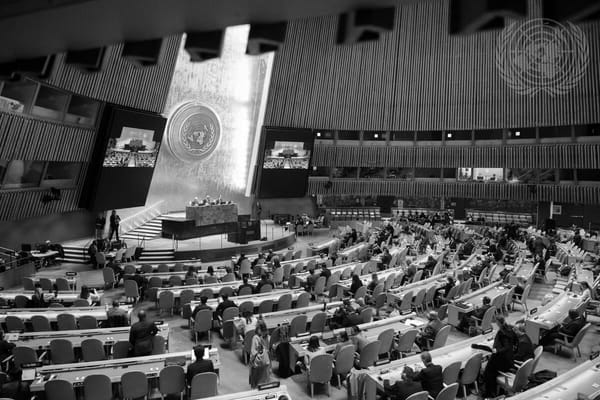
On 25 March 2026, the United Nations General Assembly adopted a resolution formally declaring the transatlantic slave trade 'the gravest crime against humanity'. Driven by Ghana under President John Dramani Mahama, and framed with deliberate diplomatic care — 'not to attribute collective guilt', but to draw a line from 18th-century plantations to 21st-century structural inequalities — the text passed with 123 votes in favour, 3 against, and 52 abstentions. The numbers, however, tell only part o ⋙

slavery, United Nations, global history, reparations, Reputational politics

Research Highlights

Democracy on the Brink: Democratic crises, Authoritarian threats and Collective resistance

Join us on Monday, 17 November, at the Scuola Superiore Sant’Anna (Pisa) for Democracy on the Brink, ⋙

SHUT-MED Prin project final conference, 5-6/06, SSSA Pisa

Conference “The Changing Governance of Migration in the Mediterranean and Beyond”, in the framework of the PRIN project ⋙

Workshop Digital Reconfigurations, University of Padova 3-4/06

Digital Reconfigurations. Exploring the interplay between data, infrastructures and social processes, University of Padova, June 3-4, 2025 ⋙

ERIS Emerging Research in International Security

Tag cloud

Sahel | terrorism | Turkey | Italy | Culture | academic freedom | Crime | Reviews | Mali |